
Finding the right international study destination can feel like a maze, especially when English proficiency tests like IELTS stand in your way. If you are an international student looking for a world-class education without the stress of a high-stakes exam, you are in luck. Many Malaysian universities let international students study in Malaysia without IELTS.
1. Can You Study in Malaysia Without IELTS?
Yes, international students can study in Malaysia without IELTS in 2026. Many Malaysian universities accept alternatives such as MOI letters, Duolingo, TOEFL, PTE, internal English tests, or foundation programs. However, requirements vary by university, course, and visa conditions.
Several universities in Malaysia without IELTS accept students who can provide:
-
- MOI letters: A document from your previous school stating you were taught in English.
- Internal English Tests: Many campuses host their own assessment upon your arrival.
- Alternative exams: Tests like the TOEFL, PTE, or even the Duolingo English Test (DET) are gaining massive ground.
- Foundation programs: Completing a local pre-university course that includes English training.
2. Does Malaysia Require IELTS for International Students?
2.1 University Requirements vs. Visa Requirements
It is vital to distinguish between what the university wants and what immigration (EMGS) requires. EMGS is Malaysia’s centralized international student visa processing system. Most universities are flexible, but the Education Malaysia Global Services (EMGS) requires a confirmed “English Proficiency” status as part of the Malaysian student visa process. If the university accepts your MOI, EMGS usually accepts that decision.
2.2 When IELTS Is Required
Although many students can study in Malaysia without IELTS, some programs remain stricter. Competitive programs and research degrees often require IELTS to ensure students can handle academic demands.
- The program has heavy communication demands, such as law or healthcare programs.
- IELTS becomes highly mandatory for external, prestigious, or fully-funded government scholarships.
- The faculty follows external accreditation rules, which often set minimum IELTS or equivalent scores.
- The applicant does not have strong evidence of previous English study or fails an internal placement test.
2.3 When IELTS Is Not Required
Many students qualify without IELTS if they:
- Studied in English-medium schools
- Hold an MOI letter
- Pass internal English tests
- Complete foundation English courses
- Submit alternative test scores
This is especially common for undergraduate applications. In these cases, the student can study in Malaysia without IELTS while still satisfying the university and visa language requirements.
2.4 Is IELTS Required for Malaysian Student Visa?
Technically, no. The Malaysian immigration department relies on the university to vouch for your language skills. As long as the university issues you a “Clean” Offer Letter (meaning no English conditions are left), your visa process will move forward. However, students should understand something important. Poorly prepared alternative English proof sometimes causes delayed processing and additional verification requests. This is why proper documentation matters. Study Comet helps students prepare accurate English documentation to avoid unnecessary visa delays and approval complications.
3. Alternatives to IELTS for Studying in Malaysia
3.1 Medium of Instruction (MOI) Letter
An MOI letter is a document from a previous school, college, or university that confirms the language of teaching was English. It usually states that all or most subjects were delivered and examined in English during a specific period.
Many universities in Malaysia without ielts accept MOI as proof of English, especially for students who completed a full degree or several years of schooling in English. However, the letter must be on official letterhead, carry a stamp and signature, and clearly mention “English” as the medium of instruction.
Students who completed the following often qualify through MOI:
- CBSE
- ICSE
- British curriculum
- American curriculum
- English-medium universities
3.2 University English Placement and Internal Tests
Some universities conduct their own English assessments.
These internal tests evaluate:
- Reading
- Writing
- Listening
- Speaking
Students who pass can begin their academic program directly. Students who do not meet the required level may need additional English classes.
3.3 TOEFL as an Alternative
TOEFL is one of the most widely recognized English tests globally, and many Malaysian universities accept it as equal to IELTS. For students who already have a TOEFL score, there is usually no need to take IELTS again.
Common English Test Score Requirements in Malaysia:
| English Test | Common Minimum Score |
| IELTS | 5.0 – 6.5 |
| TOEFL iBT | 46 – 80 |
| PTE Academic | 42 – 58 |
| Duolingo English Test | 90 – 115 |
3.4 PTE Academic as an Alternative
The Pearson Test of English (PTE) is fast. You often get results in 48 hours, which is perfect for last-minute applications. Many universities in Malaysia now list PTE Academic alongside IELTS and TOEFL as accepted proof of English.
Score requirements again differ by course, but a good PTE result can open the same doors as IELTS, especially at private institutions and branch campuses. Because it is fully computer-based and often available at frequent test dates, PTE is a practical option for students in busy cities.
3.5 Duolingo English Test Acceptance
Since 2020, many private universities (like APU and Taylor’s) have started accepting Duolingo English Test (DET). It is affordable, can be taken at home, and feels less stressful for many students.
At the same time, applicants need to be cautious. Acceptance policies change frequently. Always confirm directly with the university.
3.6 Interview-Based English Assessment
In some cases, a faculty representative may conduct a Zoom interview. If the student communicates clearly and confidently in English, the university may decide that no further test is needed, especially when combined with MOI or English-medium transcripts. However, if the interview shows major language gaps, the university might recommend an English course or conditional offer instead.
3.7 Internal English Support (ESL / Bridging)
Many universities also offer internal English as a Second Language (ESL) classes or short bridging courses alongside the main program. Some institutions also offer pre-sessional English programs that prepare international students for degree-level coursework before the semester officially begins.
Sometimes, admission is granted on the condition that the student joins a certain level of ESL or bridging module in the first semester. This allows them to study in Malaysia without IELTS immediately while improving their language gradually with professional support.
4. Top Universities in Malaysia That Accept IELTS Alternatives
Choosing where to study in Malaysia without IELTS depends on your field.The universities listed below are examples of institutions that are known to be flexible and friendly to international students. They have been popular choices for those asking “can I study in Malaysia without IELTS?” because they often provide more than one way to prove English.
4.1 Top Public Universities Allowing IELTS Alternatives
Several public universities may accept alternative English waivers depending on the faculty and program.
These include:
- Universiti Malaya (UM)
- Universiti Putra Malaysia (UPM)
- Universiti Sains Malaysia (USM)
- Universiti Kebangsaan Malaysia (UKM)
- Universiti Teknologi Malaysia (UTM)
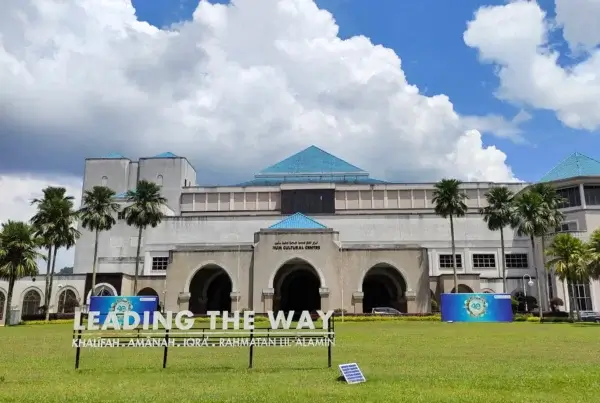
- International Islamic University Malaysia (IIUM)
At the same time, public universities are usually stricter than many private institutions. They may accept IELTS equivalents like TOEFL or PTE, but not always internal or very casual proof. If the goal is to study in Malaysia as international students without IELTS at a top public university, it is important to check each faculty’s rules carefully. Health, education, and law programs are the strictest.
4.2 Comparison of Malaysian Universities Accepting IELTS Alternatives
English language requirements can vary significantly between Malaysian universities and programs. The table below provides a general comparison of how some popular universities handle MOI letters, internal English tests, and alternative English qualifications for international students.
| University | Accepts MOI | Internal Test | Duolingo |
| IIUM | Sometimes | Yes | Limited |
| APU | Yes | Yes | Yes |
| Taylor’s University | Sometimes | Limited | Sometimes |
| UCSI University | Yes | Yes | Limited |
| SEGi University | Yes | Yes | Flexible |
| INTI International University | Yes | Sometimes | Limited |
4.3 Top Private and International Universities Accepting IELTS Alternatives
Private universities and foreign branch campuses in Malaysia tend to offer more flexible routes for students who want to study in Malaysia without IELTS. Below are some key examples and how they often handle academic language requirements.
4.3.1 Asia Pacific University (APU)
A leader in tech, APU is very friendly toward MOI letters. They also have an excellent Intensive English Centre.
4.3.2 Taylor’s University
Taylor’s University is one of Malaysia’s most recognized private universities. It accepts various alternatives including PTE and their own internal assessments for many programs.
4.3.3 UCSI University
UCSI university offers a placement test. If you don’t meet the score, you can join their English transition classes.
4.3.4 SEGi University
SEGi is known for its flexible admission pathways. Many applicants manage to study in Malaysia without IELTS at SEGi by using MOI, internal tests, or foundation programs.
4.3.6 INTI International University
INTI has a strong focus on industry-linked learning and partnerships with foreign universities. It commonly accepts TOEFL, PTE, and other exams alongside IELTS. Some programs may consider MOI and internal tests, especially at diploma and foundation level.
4.3.7 Monash University Malaysia
Monash University Malaysia is the branch campus of a top Australian university. Because of its global brand and accreditation, its English requirements are more formal. However, if you studied a recognized English curriculum (like IB or A-Levels), you won’t need IELTS.
5. MOI Letters for Malaysian Universities
Many students who want to study in Malaysia without IELTS rely on an MOI letter as their main proof of English. Used correctly, this letter can be a powerful document. Used carelessly, it can lead to delays, rejections, or extra conditions.
5.1 How to Get an MOI Letter
To obtain a Medium of Instruction (MOI) letter, contact your school’s Registrar, Principal, or Academic Office. Most schools already have a standard MOI letter format and can issue it upon request. The letter should clearly state that your education was conducted in English.
5.2 Best MOI Format for Malaysian Universities
A strong MOI letter should include:
- Official letterhead with the institution’s name, address, and logo
- Date of issue
- Student’s full name and, if possible, passport number
- Name of the program or level (e.g., Bachelor of Science in Computer Science)
- Duration of study (e.g., September 2024 – June 2026)
- A clear sentence stating that “the medium of instruction was English”
- Signature, name, and designation of the authorised officer
- Official stamp or seal
Using this clear and simple format helps the admission team quickly understand the student’s background and may make it easier to study in Malaysia for international students without IELTS.
5.3 Common MOI Rejection Reasons
MOI letters often get rejected because of:
- Missing stamps
- Missing signatures
- No official letterhead
- Vague wording
- Partial English-medium statements
- Mismatch with transcripts
Many students face delays because their MOI letters do not clearly mention that examinations and teaching were conducted entirely in English. A strong, accurate MOI can be the key to study in Malaysia without IELTS at many private universities.
5.4 Countries Commonly Accepted Through MOI
Students from countries with strong English-medium education systems often have a higher chance of MOI acceptance. This commonly includes applicants from India, Pakistan, Bangladesh, Nigeria, the Maldives, and the UAE. At the same time, acceptance still depends on the university and program requirements.
6. How to Apply to Malaysian Universities Without IELTS: Step-by-step
Applying to universities in Malaysia without IELTS is similar to normal applications, but with extra attention on how English is presented. A clear plan can save time and reduce stress.
6.1 Shortlisting Universities That Accept IELTS Alternatives
The first step is identifying universities that match:
- Budget
- Program goals
- English flexibility
- Career plans
6.2 Checking Program-Specific English Requirements
Different faculties may follow different rules. Always verify program-specific requirements.
For example:
- Business programs may accept MOI
- Nursing programs may require IELTS
- Engineering may allow internal tests
6.3 Preparing Academic Documents and English proficiency requirements
Document quality matters. Blurry scans and inconsistent details create unnecessary delays. Students usually need:
- Passport
- Academic transcripts
- Certificates
- MOI letter
- English test scores (if available)
- Passport photos
6.4 Attending English or Admission Interviews
Some universities may conduct interviews to assess English communication and academic readiness.
6.5 Receiving Offer Letter and English Conditions
Universities may issue:
- Full offers
- Conditional offers
- English pathway offers
6.6 Starting the EMGS Student Visa Process
Once accepted, universities begin the visa process through EMGS. In most cases, admission and visa processing together may take between 4 to 8 weeks depending on the university and intake period.
Below are the required documents for EMGS:
- Submit passport copies
- Complete medical checks
- Provide financial documents
- Wait for Visa Approval Letter (VAL)
7. How to Strengthen Your Application Without IELTS
When applying without IELTS, everything else in the file becomes more important. Strong academics, clear documents, and good communication can make the difference between a quick offer and a rejection.
7.1 Writing a Strong, Clear Statement of Purpose
The Statement of Purpose (SOP) is not always mandatory, but when it is, it should be simple, honest, and easy to read. Use clear sentences to explain:
- Academic background
- Reasons for choosing Malaysia and the specific program
- Future goals after graduation
A genuine SOP also shows the student can communicate in English, which supports the plan to study in Malaysia without IELTS.
7.2 Showing Consistently Strong Academic Performance
Universities feel more comfortable accepting MOI instead of IELTS when the student has good grades, especially in subjects taught in English. If there are weak points in the academic record, they can be explained briefly in the SOP. A solid academic profile helps answer “can I study in Malaysia without IELTS?” in a positive way.
7.3 Using Correct and Official English Documentation
Students should submit:
- Proper MOI letters
- Certified translations
- Official stamps
- Consistent records
Poorly prepared documents can create doubts and make universities less willing to accept non-IELTS proof. Good documents, on the other hand, can make universities more open to alternatives.
7.4 Applying Early to Avoid Intake and Visa Delays
Applying early is one of the simplest ways to strengthen an application. Early applicants have more time to fix any missing documents, attend interviews, or arrange alternative English waiver if needed.
7.5 Avoiding Incomplete or Contradictory Information
Always make sure that names, dates, and program titles match across all documents.
Contradictions or missing pages can cause delays. When applying without IELTS, it is better not to create any requests for more documents or even rejections.
8. Scholarships in Malaysia
8.1 University Scholarships for International Students
Many Malaysian universities offer scholarships for international students.
APU Merit Awards: Asia Pacific University offers tuition fee rebates ranging from 10% to 30% for international students. Eligibility is based on your previous academic results, and English requirements can be met via an MOI letter.
Taylor’s Excellence Awards: Taylor’s University provides various merit scholarships. If your prior education was in English, you can submit an MOI letter to qualify for these awards without an IELTS certificate.
SEGi High Achievers Scholarship: SEGi offers partial scholarships to students with strong academic backgrounds. They are highly flexible with accepted English test scores, often waiving IELTS for students from English-medium schools.
8.2 Fully Funded or Government Scholarships and English Requirements
While many universities allow flexible entry, Malaysian Government Scholarships are highly prestigious and usually maintain stricter English proficiency standards to ensure global competitiveness. These scholarships are fully funded and may cover tuition fees, accommodation, and living expenses in Malaysia.
Malaysia International Scholarship (MIS): Aimed at outstanding postgraduate students worldwide. It covers full tuition and a monthly stipend.
- Coverage: It provides 100% tuition fee waivers paid directly to the university and a monthly living allowance of RM 1,500.
- English Requirement: Typically requires a minimum IELTS score of 6.0 or TOEFL iBT of 60. However, it may waive these if you provide official proof that your previous degree was conducted entirely in English (MOI).
Malaysian Technical Cooperation Programme (MTCP): This scholarship is a strategic capacity-building initiative for students from developing countries pursuing a Master’s degree.
- Coverage: It is a truly “full-ride” package that includes tuition fees, a monthly stipend, and round-trip economy airfare.
- English Requirement: Applicants must provide a scanned copy of an original English proficiency certificate (IELTS 6.0 / TOEFL iBT 60) or an MOI.
ASEAN Scholarship: Specific for students from ASEAN member states. It provides comprehensive funding for high achievers.
- Coverage: In addition to tuition and living allowances, it often includes a laptop allowance, book grants, and a guaranteed employment bond, giving you a direct career path into the banking industry after graduation.
- English Requirement: Strong preference is given to candidates with formal test scores (IELTS/TOEFL), though exceptional academic records from English-medium institutions are considered.
8.3 Can You Get Scholarships Without IELTS?
Can I study in Malaysia without IELTS and still get a scholarship? Yes! Many universities offer Merit-Based Scholarships based on your GPA. However, fully-funded government scholarships (like the MIS) often require a formal English score to be competitive.
9. Is It Better to Apply With or Without IELTS?
For some students, applying without IELTS is the perfect choice. For others, taking IELTS, TOEFL, or PTE still makes sense. There is no single answer that fits everyone.
9.1 Benefits of Applying Without IELTS
Skipping IELTS saves exam fees, preparation time, and stress. It is especially helpful for students who already studied in English and can get MOI or have strong internal test options. It also allows faster applications in some cases, making it easier to catch the next intake.
9.2 Situations Where IELTS Is Helpful or Recommended
Students applying for medicine, law, or government-funded scholarships usually benefit from having a recognised English test score even if alternatives are technically accepted. IELTS strengthen applications for:
- Scholarships
- Competitive universities
- Healthcare programs
- Highly ranked institutions
9.3 Which Option Is Faster for Admission and Visa?
For students who already have a valid IELTS or PTE score, applying with that result is often faster because the university has fewer questions about English. For those without any test but with MOI ready, applying without IELTS can be quicker.
However, if MOI is delayed or rejected, and the student then has to take IELTS at the last minute, the whole process can become much slower than if they had planned the test earlier.
10. Why Students Choose Study Comet for Malaysia Admissions
Choosing the right university and managing the admission process can be overwhelming, especially for students applying without IELTS. Many international students choose Study Comet because of its personalized guidance, strong university partnerships, and deep understanding of Malaysian admissions and student visa requirements. From selecting the right course to preparing English proficiency documents such as MOI letters, Study Comet helps simplify every stage of the journey.
With Study Comet, students receive:
- Expert university and program recommendations
- Guidance on IELTS alternatives, MOI, and accepted English tests
- Complete admission and EMGS visa assistance
- Support with documentation, offer letters, and enrollment
- Personalized counseling for international students
Ready to fast-track your international education without the stress of an English exam? Contact the Study Comet Team Today to book your free consultation and secure your official offer letter for the upcoming intake.
- Frequently Asked Questions
11.1 Can I study in Malaysia without IELTS from India, Bangladesh, or Pakistan?
Yes. Many Malaysian universities accept students from India, Bangladesh, and Pakistan without IELTS if they provide acceptable English proficiency requirements such as MOI letters or alternative test scores.
11.2 Which universities in Malaysia do not require IELTS but accept MOI or alternatives?
Several universities may accept alternatives including IIUM, APU, UCSI, SEGi, INTI, MMU, and Taylor’s University depending on the course and faculty.
11.3 Does IIUM accept students without IELTS?
IIUM may accept students without IELTS through alternative English proficiency requirements or internal assessments depending on the program.
11.4 Can I study medicine or nursing in Malaysia without IELTS?
Certain institutions may still require IELTS or stronger English proficiency requirements for medicine and nursing programs.
11.5 Is Duolingo accepted in Malaysian universities?
Some universities accept Duolingo, but policies vary and may change frequently.
11.6 Can I get a scholarship in Malaysia without IELTS?
Yes, but scholarship options may become more competitive without standardized English test scores.
11.7 Which intake is best for applying without IELTS?
Popular intakes include February, April, July, and September depending on the university.
Applying early is usually the smartest approach.