

1. Introduction
Studying in Malaysia after 12th offers an affordable, globally recognized, and student-friendly education path through some of the top universities in Malaysia. For many international students, Malaysia offers the right balance of quality, cost, and convenience. It is one of the few study destinations where world-class education feels practical, accessible, and within reach.
2. Why Study in Malaysia After 12th?
Malaysia has become one of Asia’s leading higher education hubs. It offers internationally recognized degrees, affordable tuition fees, English-medium education, and modern campuses without the financial pressure seen in countries like the UK, USA, or Australia. For many students, the high cost makes studying abroad feel impossible. Malaysia changes that equation. Instead of spending RM 500,000 or more on a foreign degree in Western countries, many students complete high-quality degrees in Malaysia for half the cost while still earning globally respected qualifications.
2.1 Is a Malaysian Degree Worth It? Global Recognition (MOHE & MQA)
When considering studying abroad, destinations like the US, UK, or Australia usually come to mind alongside their massive price tags. Malaysia matches Western education standards at a fraction of the cost.
- World-Class Rankings: Malaysia features over 30 institutions in the QS World University Rankings 2026, with several ranking comfortably in the global top 500.
- The “Twinning” Program Advantage: Many Malaysian universities offer 2+1 or 1+2 “twinning” programs with top-tier partner universities in the UK, Australia, and the US through globally recognized credit transfer models. You can complete part of your degree in Malaysia, graduate from a Western university, and save up to 60% on total costs.
- No Massive Language Barrier: English is the primary medium of instruction across all higher education institutions, making it easy to adapt to lectures and daily life.
- The 12-Month Graduate Pass: Introduced recently, Malaysia’s Graduate (Social) Visit Pass allows international students to stay in the country for up to 12 months after graduation to secure a job and kickstart a global career.
2.2 Do Indian Students Need a UGC Equivalence Certificate for a Malaysian Degree?
Yes. Indian students who graduate from a Malaysian university may need a UGC Equivalence Certificate when using their degree in India for higher education, government jobs, banking, professional licensing, or other official purposes.
Many students believe that attestation from Malaysia’s Ministry of Higher Education (MOHE), Ministry of Foreign Affairs (MoFA), and the High Commission of India is enough. While these attestations confirm that the degree is genuine, some Indian institutions may also require a UGC Equivalence Certificate to formally recognize a foreign qualification.
The application process is fully online through the UGC Equivalence Portal. Applicants must typically submit their degree certificates, academic transcripts, passport and visa records covering their study period, and 10th and 12th standard academic details.
The application fee is approximately ₹5,900, and processing usually takes around 15 working days.
If you plan to return to India after studying in Malaysia, it is advisable to check whether your intended university, employer, or government department requires UGC equivalence and apply early to avoid delays.
Quick Comparison: India vs. Malaysia vs. Western Countries
To help visualize how the financial and lifestyle factors stack up, here is a quick overview:
| Factor | Studying in India | Studying in Malaysia | Studying in the US / UK |
| Average Annual Tuition | ₹1 Lakh – ₹5 Lakhs (Private) | ₹3.5 Lakhs – ₹7 Lakhs | ₹25 Lakhs – ₹45 Lakhs |
| Monthly Living Expenses | ₹15,000 – ₹30,000 | ₹25,000 – ₹40,000 | ₹1 Lakh – ₹1.5 Lakhs |
| Global Degrees Available | Limited to local institutions | High (via Twinning/Branch Campuses) | High (Native) |
| Post-Study Work Visa | N/A | 12-Month Graduate Pass | 1–3 Years (Highly regulated) |
3. Can International Students Study in Malaysia After 12th?
Yes, international students can absolutely study in Malaysia after 12th. The Malaysian Ministry of Higher Education (MOHE) officially accepts major senior secondary school qualifications, enabling students to enroll directly into Foundation, Diploma, or Bachelor’s degree programs right after completing high school.
Whether your background is a South Asian curriculum or a Middle Eastern regional board, your high school qualification is valid. Accepted boards include:
- India: CBSE, ICSE, and all individual State Boards.
- Pakistan: Higher Secondary School Certificate (HSSC) / Intermediate.
- Bangladesh: Higher Secondary Certificate (HSC) for those mapping their malaysia study after hsc pathway.
- Middle East: General Secondary Education Certificate (GSEC / Tawjihiyah).
4. Choosing the Right Pathway When You Study in Malaysia After Matric
Understanding your options helps you choose the most efficient academic route. If you are coordinating your study in Malaysia after matric, you can select from several distinct academic pathways depending on your grades and career timeline.
4.1 Foundation and Pre-University Programs (1-Year Fast Track)
Foundation programs are intensive one-year courses that prepare students for a university’s bachelor’s degree program. They act as an academic bridge, helping you adapt to university-level learning before commencing your degree.
4.2 Diploma Programs (2 to 2.5 Years)
Diplomas focus heavily on practical skills and industry-specific training. They usually take up to two and a half years and combine practical training with theoretical knowledge.
4.3 Standard Bachelor’s Degree Programs (3 to 4 Years)
This is the traditional undergraduate route. It provides deep theoretical knowledge, comprehensive research training, and compulsory internships over three to four years.
4.4 Diploma vs. Bachelor’s Degree: Which is Better?
Choosing between a Diploma and a Bachelor’s degree depends on your immediate academic background and career goals. A diploma is useful for students needing a lower-cost entry route. A bachelor’s degree offers stronger long-term international career prospects.
| Feature | Diploma Programs | Bachelor’s Degree Programs |
| Duration | 2 to 2.5 Years | 3 to 4 Years |
| Focus | Practical, hands-on, vocational skills | Comprehensive theory, research, and strategy |
| Academic Entry Requirement | Passing marks in 12th or equivalent | Higher score percentages or pre-university completion |
| Progression Pathway | Can enter year 2 of a Bachelor’s program | Immediate eligibility for Master’s programs |
4.5 Twinning and Credit Transfer Programs (2+1)
Twinning programs (like 2+1 or 1+2) allow you to complete your first one or two years in Malaysia, then transfer seamlessly to partner universities in the UK, Australia, or New Zealand for your final year. You graduate with an authentic degree from the Western institution while saving significantly on your initial tuition and housing.
4.6 Foreign Branch Campuses in Malaysia
World-famous universities like Monash University Malaysia and Heriot-Watt University have established fully functional campuses within Malaysia. You study the same curriculum and receive the same degree as students in Melbourne or Edinburgh while benefiting from Malaysia’s lower living costs.
5. Study in Malaysia Requirements After 12th
Understanding admission requirements early helps avoid unnecessary delays.
5.1 Academic Eligibility Requirements
Public universities often require aggregate scores between 75% and 80% in 12th-grade final exams. Private universities offer more flexibility, generally requiring a successful pass with minimum marks ranging from 50% to 60%, depending on the specific major you choose.
5.2 HSC, Matric, and Other Certificates Accepted for Malaysia Study After HSC
Universities accept applications from a wide range of global school systems:
- South Asia: Central Boards (CBSE/ICSE) and State Boards for students organizing their malaysia study after hsc.
- Middle East: Tawjihiyah and GSEC certificates from regional Ministries of Education.
- International: Cambridge A-Levels, International Baccalaureate (IB), and American High School Diplomas.
5.3 English Language Requirements
While some universities accept an official medium of instruction (MOI) certificate, many students also explore options to study in Malaysia without IELTS.
Common Minimum Scores:
| Test | Typical Requirement |
| IELTS | 5.0 – 6.5 |
| TOEFL iBT | 42 – 79 |
| PTE | 47 – 58 |
| MUET | Accepted by some universities |
5.4 Required Documents Checklist
Malaysian universities require the following documents:
- Passport copy (valid for at least 18 months).
- Passport-size photos
- 10th-grade certificate
- 12th-grade certificate
- Academic transcripts
- English proficiency results
- Medical reports
- Statement of purpose
- Recommendation letters (sometimes)
5.5 Financial Requirements
Unlike Western countries, the Malaysian Immigration Department does not require complex, long-standing bank histories or frozen financial assets. You only need a bank statement showing that your family can cover your first-year tuition fees and living expenses.
6. Best Malaysia Courses After 12th by Stream
Selecting a high-demand major can help improve your post-graduation job prospects.
6.1. Science Stream: Engineering, Computer Science, and AI
Malaysia’s engineering degrees are widely recognized through the Washington Accord, meaning your degree is fully recognized across countries like Canada, the US, and the UK. With the region’s expanding digital footprint, specialized tracks in Artificial Intelligence, Cyber Security, and Cloud Computing are highly sought after.
6.2. Medical Stream: MBBS and Allied Health Programs
Malaysian medical institutions offer advanced clinical setups. For Indian students planning to return home to practice, select universities maintain the necessary recognitions that align with medical council standards, provided you meet your home country’s prerequisite criteria, such as clearing the NEET exam.
6.3. Commerce Stream: Business Administration, Data Analytics, and Global Finance
Kuala Lumpur is a major financial hub for Southeast Asia. Business programs here go beyond standard management theories, integrating practical modules like big data analysis, international trade laws, and digital supply chain architecture.
6.4. Arts & Creative Streams: Graphic Design, Multimedia, and Hospitality Management
Supported by Malaysia’s strong tourism sector and growing digital media industry, creative programs focus on hands-on portfolio development. Courses cover everything from UI/UX design to luxury resort management.
7. Best Universities to Study in Malaysia After 12th
Choosing the right university depends on your budget and career goals. Here is an overview of top institutions welcoming international high school leavers:
Top Universities and Estimated Annual Tuition
| University | Type | Estimated Annual Tuition (RM) | Approx. Annual Tuition (INR) | Popular Fields |
| International Islamic University Malaysia (IIUM) | Public | RM 15,000 – RM 35,000 | ₹2.6–6.1 lakh | Law, business, engineering, social sciences |
| Asia Pacific University (APU) | Private | RM 28,000 – RM 42,000 | ₹4.9–7.3 lakh | IT, AI, engineering, data science and Digital technologies |
| Taylor’s University | Private | RM 32,000 – RM 50,000 | ₹5.6–8.8 lakh | Business, hospitality, design |
| UCSI University | Private | RM 25,000 – RM 45,000 | ₹4.4–7.9 lakh | Health sciences, music, engineering |
| Monash University Malaysia | Branch campus | RM 45,000 – RM 75,000 | ₹7.9–13.1 lakh | Medicine, business, IT, science |
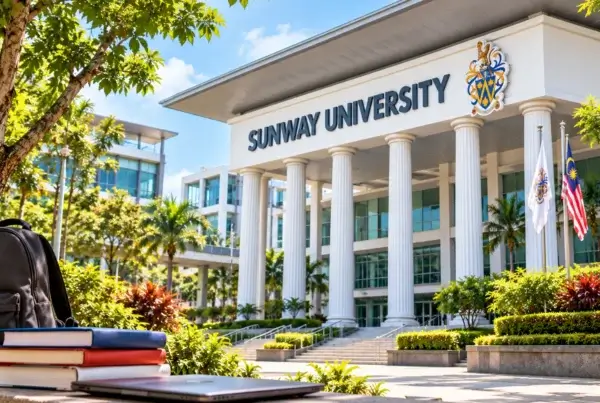
| Sunway University | Private | RM 28,000 – RM 50,000 | ₹4.9–8.8 lakh | Business, psychology, hospitality, computing |
Note: The figures below represent average annual tuition estimates for international students in 2026.
8. Cost of Studying in Malaysia After 12th
Malaysia is much more affordable than many Western destinations. Still, the total cost depends on the university, course, and lifestyle.
8.1 Average Tuition Fees by Course
| Course | Public Universities | Private Universities |
| Engineering | RM 15,000 – RM 30,000
₹2.7L – ₹5.4L |
RM 30,000 – RM 55,000
₹5.4L – ₹9.9L |
| Computer Science / AI | RM 15,000 – RM 28,000
₹2.7L – ₹5L |
RM 28,000 – RM 55,000
₹5L – ₹9.9L |
| MBBS / Medicine | RM 25,000 – RM 80,000
₹4.5L – ₹14.4L |
RM 80,000 – RM 140,000
₹14.4L – ₹25.2L |
| Business & Finance | RM 12,000 – RM 25,000
₹2.1L – ₹4.5L |
RM 20,000 – RM 45,000
₹3.6L – ₹8.1L |
| Hospitality & Tourism | RM 15,000 – RM 25,000
₹2.7L – ₹4.5L |
RM 20,000 – RM 40,000
₹3.6L – ₹7.2L |
Tuition fees are approximate 2026 estimates for international students and may vary depending on university, specialization, and scholarship eligibility.
8.2 Monthly Student Living Costs
| Expense | RM (Average Monthly Cost) | INR (Average Monthly Cost) |
| Accommodation | RM 500 – RM 1,500 | ₹9,000 – ₹27,000 |
| Food | RM 600 – RM 1,000 | ₹10,800 – ₹18,000 |
| Transport | RM 100 – RM 300 | ₹1,800 – ₹5,400 |
| Internet & Utilities | RM 100 – RM 250 | ₹1,800 – ₹4,500 |
| Medical Insurance | RM 50 – RM 150 | ₹900 – ₹2,700 |
| Miscellaneous | RM 300 – RM 700 | ₹5,400 – ₹12,600 |
Monthly living expenses vary depending on lifestyle, accommodation type, and city. Students in Kuala Lumpur and Selangor typically spend more than students in smaller Malaysian cities.
8.3 Budgeting Tips for International Students
These practical savings matter more than students initially realize.
- Get the RapidKL Concession Card: International students are eligible for a 50% discount on all public trains and buses across Kuala Lumpur.
- Cook at Home or Use Student Cafeterias: While local campus cafeterias offer very affordable meals, preparing your own food can help you save even more.
- Opt for Shared Condominiums: Renting an off-campus room in a shared apartment with other international students often gives you premium lifestyle amenities (like pools and gyms) at split utility costs.
- Buy Student Packages: Many banks, transport services, and mobile providers offer student discounts.
9. Scholarships for International Students in Malaysia
Many Malaysian universities offer scholarships based on academic performance.
9.1 Merit-Based Scholarships
Top private universities like Taylor’s University, UCSI, and Asia Pacific University (APU) offer merit-based tuition waivers based on high school performance. Students with exceptional marks in CBSE, ICSE, or Tawjihiyah boards can secure tuition discounts ranging from 15% to 100%. These awards are evaluated directly during the admission process, requiring no separate financial application.
9.2 Government Scholarships
The Malaysian Government offers prestigious funding options like the Malaysian International Scholarship (MIS) to attract talented global minds. Additionally, individual state agencies and regional Middle Eastern or South Asian bodies grant fellowships that cover full tuition fees, medical insurance, and a monthly living stipend for high-achieving international students pursuing high-demand majors.
10. How to Apply to Malaysian Universities After 12th
Here is the step-by-step admission process for Malaysian universities.
- Choose Your Course and University: Pick a major that aligns with your long-term career goals and find the university that fits your budget.
- Check Admission Requirements: Confirm that your 12th-grade scores or equivalent high school qualifications match the prerequisites of your chosen program.
- Prepare Academic Documents: Gather your certificates, transcripts, and passport scans, ensuring all copies are clear and legible.
- Submit Your Application: Submit your documents through the university’s official admissions portal.
- Receive the Offer Letter: If you meet the criteria, the university will issue your official, unconditional Letter of Offer.
- Apply for the Visa Approval Letter (VAL): Submit your visa application through the centralized EMGS portal to get your travel clearance.
- Complete Medical Screening: Complete your required pre-departure medical forms through an authorized health clinic.
- Prepare for Travel and Arrival: Once your single-entry visa is endorsed, book your flights and coordinate with your university’s international student office for airport pickup.
11. Malaysia Student Visa Process After 12th
International students need the right visa before entering Malaysia for study.The process is structured and usually managed through the university and EMGS system.
11.1. What is EMGS?
Education Malaysia Global Services (EMGS) is the official, government-owned gateway that processes all international student visa applications on behalf of the Malaysian Immigration Department. Students should also prepare all study in Malaysia requirements before starting the EMGS process.
11.2. The Visa Approval Letter (VAL) Process
Once your university registers your details on the EMGS portal, you can track your application’s progress online. Once approved, EMGS issues a digital Visa Approval Letter (VAL), which serves as your provisional entry clearance.
11.3. Single Entry Visa Requirements
Depending on your nationality, you will take your digital VAL to the nearest Malaysian Embassy or apply online for an electronic Single Entry Visa (eSEV). This document gives you legal permission to enter the country.
11.4. Student Pass Procedures
Within seven days of arriving in Malaysia, students must complete a post-arrival medical check. Once cleared, your passport is submitted to immigration to receive your official Student Pass sticker, along with your i-Kad (your national international student identity card).
11.5. Visa Processing Time
EMGS usually processes eVAL applications within 10 to 14 working days after document verification.
11.6 Common Reasons for Visa Delays
- Incomplete documents
- Low-Quality Document Scans
- Passport validity issues
- Incorrect Photo Dimensions
- Delayed medical reports
12. Intakes in Malaysian Universities
Plan your application timeline around the country’s three main intake windows:
| Intake Window | Application Deadline | Best Suited For |
| January/February | October – November | Students who completed their high school qualifications late in the year. |
| May/June | February – March | Fast-track entry for students seeking Foundation or Diploma programs. |
| September/October | June – July | The Primary Intake: Offers the widest selection of courses and scholarships. |
12.1 Which Intake is Best?
September is the most popular intake because universities offer more programs. However, the best intake depends on when your documents are ready and when your visa can be processed. The smartest intake is the one that matches your application timeline, not just the most popular one.
13. Career Opportunities After Graduation in Malaysia
Studying in Malaysia is only the first step toward building a global career.
13.1 Internships During Studies
Most Bachelor’s degrees include a mandatory 3-to-6-month corporate internship. This gives you hands-on experience and valuable professional networking opportunities within top companies before you graduate.
13.2 The 12-Month Graduate (Social) Visit Pass
The 12-Month Graduate (Social) Visit Pass allows international students graduating with a Bachelor’s degree or higher to remain in Malaysia for up to 12 months.It allows graduates to travel, explore career opportunities, and work part-time in approved sectors without immediate corporate sponsorship.
13.3 High-Demand Industries
Malaysia’s job market is growing in fields like e-commerce logistics, semiconductor manufacturing, data analytics, and software development, creating distinct opportunities for qualified graduates.
13.4 Global Career Opportunities
Because Malaysian degrees are internationally recognized, graduates can pursue careers in global hubs like Singapore, Dubai, and Europe.
13.5 Further Study Options After Graduation
An undergraduate degree from a top Malaysian institution provides a solid foundation for transitioning directly into advanced Master’s or PhD programs at elite universities worldwide.
14. Common Mistakes Students Make When Applying to Malaysia
Avoiding these common pitfalls can save you time, money, and stress:
- Choosing Universities Based Only on Fees: Affordable tuition matters, but you should also consider facilities, industry connections, and student support.
- Ignoring Accreditation and Recognition: Always double-check that your specific program is fully accredited on the official MQA portal.
- Submitting Incomplete Documents: Missing passport pages or uploading uncertified school certificates can stall your visa application for weeks.
- Delaying Visa Applications: Waiting until the last minute to begin your EMGS application can lead to missed intake dates due to peak-season processing volumes.
- Depending on Unverified Agents: Unregistered education agents can cause hidden fees and poor university placements.
15. Why Choose Study Comet for Malaysia Admissions?
Study Comet guides international students through every step of their university education in Malaysia. We match your grades and budget with the right courses to simplify pathways like studying in Malaysia after matric or HSC. Our team manages everything from strict document pre-audits for seamless EMGS visa processing to direct coordination with university campus offices for housing and arrival logistics.
As an official partner to top-tier institutions including International Islamic University Malaysia, Asia Pacific University, and University of Cyberjaya, we deliver comprehensive admission support, visa assistance, pre-departure guidance, and post-arrival care.
Still unsure which university fits your goals? Explore our complete list of Malaysian universities or contact the Study Comet team for personalized guidance.
16. Frequently Asked Questions
1. What are the requirements to study in Malaysia after 12th?
You need your 10th and 12th-grade certificates, academic transcripts, a passport valid for 18 months, proof of English proficiency (like IELTS), and a bank statement showing sufficient financial support.
2. Which course is best in Malaysia after 12th?
The best fields include Washington Accord-accredited Engineering, Computer Science (AI and Cybersecurity), Data Analytics, Business Administration, and MBBS, depending on your high school academic stream and long-term global career goals.
3. Is a Malaysian degree recognized internationally?
Yes. The Malaysian Qualifications Agency (MQA) and the Ministry of Higher Education strictly audit all degrees. Programs carry global recognition, and engineering degrees fall under the prestigious international Washington Accord framework.
4. Can international students work while studying in Malaysia?
Yes. International students in Malaysia may work up to 20 hours per week only during semester breaks or holidays longer than 7 days, and only with prior approval from the Malaysian Immigration Department and their university. The job must also be in approved sectors such as restaurants, hotels, petrol stations, or mini markets
5. How long does the Malaysia student visa process take?
The complete EMGS student visa approval process typically takes 4 to 8 weeks. We highly recommend submitting your application early to secure your electronic Visa Approval Letter (VAL) before your intake begins.
6. How much bank balance is needed to study in Malaysia?
You must show proof of funds covering at least one year of tuition fees and estimated living expenses. Generally, an active bank account showing a minimum balance of RM 10,000 ($\approx$ ₹1,90,000) satisfies visa screening criteria.